Polish Prof. Boguslaw Wolniewicz on the Formal Ontology of Situations
INTRODUCTION
"The theory presented below was developed in an effort to clarify the metaphysics of Wittgenstein's Tractatus. The result obtained, however, is not strictly the formal twin of his variant of Logical Atomism. but something more, general, of which the latter is lust a special case. One might call it an ontology of situations. Some basic ideas of that ontology stern from Stenius Wittgenstein's Tractatus, Oxford, 1968 and Suszko Ontology in the Tractatus of L. Wittgenstein - Notre Dame Journal of Formal Logic, 1968.
Let L be a classic propositional language. Propositions of L are supposed to have their semantic counterparts in the realm of possibility, or as Wittgenstein put it: in logical space. These counterparts are situations, and S is to be the totality of them. The situation described by a proposition a is S(a). With Meinong we call it the objective of a."
From: Boguslaw Wolniewicz - A formal ontology of situations - Studia Logica 41: 381-413 (1982). pp. 381-382.
"Different ontologies adopt different notions of existence as basic. Aristotle's paradigm of existence is given by the equivalence:
(A) to be = to be a substance.
On the other hand, the paradigm of existence adopted in Wittgenstein's Tractatus is given by the parallel equivalence:
(W) to be = to be a fact.
Now, an Aristotelian substance is the denotation of an individual name, whereas a Wittgensteinian fact is the denotation of a true proposition. It seems therefore that the notions of existence derived from these two paradigms should be quite different, and one might readily expect that the metaphysical systems erected upon them will display wide structural discrepancies.
It turns out, however, that in spite of this basic difference there runs between these two systems a deep and striking parallelism. This parallelism is so close indeed that it makes possible the construction of a vocabulary which would transform characteristic propositions of Wittgenstein's ontology into Aristotelian ones, and conversely. To show in some detail the workings of that transformation will be the subject of this paper.
The vocabulary mentioned is based on the following four fundamental correlations:
Aristotle
1) primary substances (substantiae primae)
2) prime matter (materia prima)
3) form (forma)
4) self-subsistence of primary substances (esse per se)
Wittgenstein
1) atomic facts
2) objects
3) confiugration
4) independence of atomic facts
Aristotle's ontology is an ontology of substances, Wittgenstein's ontology is an ontology of facts. But concerning the respective items of each of the pairs (1)-(4) both ontologies lay down conditions which in view of our vocabulary appear to be identical. To show this let us confront, to begin with, the items of pair (1): substances and facts.
(The interpretation of Aristotle adopted in this paper is the standard one, to be found in any competent textbook of the history of philosophy. Therefore, with but one exception, no references to Aristotle's works will be given here.)Relatively to the system involved substances and facts are of the same ontological status. Aristotle's world is the totality of substances (summa rerum), Wittgenstein's world is the totality of facts (die Gesamtheit der Tatsachen). For Aristotle whatever exists in the basic sense of the word is a primary substance, for Wittgenstein - an atomic fact. Moreover, both ontologies are MODAL ones, allowing for different modes of being (modi essendi); and both take as basic the notion of `contingent being' (esse contingens), opposed to necessary being on the one hand, and to the possibility of being on the other. Both substances and facts are entities which actually exist, but might have not existed. The equality of ontological status between substances and facts is corroborated by the circumstance that both are PARTICULARS, there being - as the saying goes - no multiplicity of entities which FALL UNDER them.
Substances and facts stand also in the same relation to the ontological categories of pairs (2) and (3). Both are always COMPOUND entities, a substance consisting of matter and form, and a fact consisting of objects and the way of their configuration. But in neither of the two systems is this compoundness to be understood literally as composition of physically separable parts or pieces. The compoundness (compositio) of a substance consists in its being formed stuff (materia informata), and the compoundness of a fact in its being a configuration of objects.
In view of correlation (4) we have also an equality of relation which a substance bears to other substances, and a fact to other facts. Self-subsistence is the characteristic attribute of primary substances: substantia prima = ens per se. If we take this to mean that each substance exists independently of the existence or non-existence of any other substance we get immediately the exact counterpart of Wittgenstein's principle of logical atomism stating the mutual independence of atomic facts. It should be noted that thus understood the attribute of self-subsistence or independence is a relative one, belonging to a substance - or to a fact - only in virtue of its relation to other substances - or facts.
From a Wittgensteinian point of view Aristotle's substances are not things, but hypostases of facts, and thus their names are not logically proper names, but name-like equivalents of propositions. (By that term we mean roughly either a noun clause of the form `that p', or any symbol which might be regarded as a definitional abbreviation of such clause.) Surely, from the Aristotelian point of view it might be easily retorted here that just the opposite is the case: substances are not `reified' facts, but on the contrary - facts are 'dereified' substances. Without passing judgement on these mutual objections let us note in passing that their symmetric character seems to be itself an additional manifestation of the parallelism discussed."
From: Boguslaw Wolniewicz - A parallelism between Wittgensteinian and Aristotelian ontologies. In Boston studies in the philosophy of science. Vol. IV. Edited by Cohen Robert S. and Wartofsky Marx W. Dordrecht: Reidel Publishing Company 1969. pp. 208-210 (notes omitted).
SELECTED PUBLICATIONS (Works in Polish are not enclosed)
In 1970 Boguslaw Wolniewicz published a Polish translation of Ludwig Wittgenstein Tractatus logico-philosophicus.
A difference between Russell's and Wittgenstein's logical atomism. In Akten des XIV. Internationalen Kongresses für Philosophie. Wien, 2. - 9. September 1968 - Vol. II. Wien: Herder 1968. pp. 263-267Reprinted in: Logic and metaphysics (1999) - pp.193-197
"A note on Black's 'Companion'," Mind 78: 141 (1969).Reprinted in: Logic and metaphysics (1999) - p. 229."It is a mistake to suppose that in Wittgenstein's "Tractatus" the meaning of Urbild has any connexion with that of picture. "
A parallelism between Wittgensteinian and Aristotelian ontologies. In Boston studies in the philosophy of science. Vol. IV. Edited by Cohen Robert S. and Wartofsky Marx W. Dordrecht: Reidel Publishing Company 1969. pp. 208-217Proceedings of the Boston Colloquium for the philosophy of science 1966/1968.Reprinted in: Logic and metaphysics (1999) - pp.198-207
"Four notion of independence," Theoria 36: 161-164 (1970).Reprinted in: Logic and metaphysics (1999) - pp.127-130.WFour (binary) relations of independence I(p,q) between propositions are distinguished: the Wittgensteinian I sub-w, the statistical I sub-s, the modal I sub-m, and the deductive I sub-d. The validity of the following theorem is argued for: I sub-w(p,q) implies I sub-s(p,q) implies I sub-m(p,q) implies Isub-d(p,q). "
Wittgensteinian foundations of non-Fregean logic. In Contemporary East European philosophy. Vol. 3. Edited by D'Angelo Edward, DeGrood David, and Riepe Dale. Bridgeport: Spartacus Books 1971. pp. 231-243
"The notion of fact as a modal operator," Teorema: 59-66 (1972).Reprinted in: Logic and metaphysics (1999) - pp. 218-224"The notion of fact /fp = "it is a fact that p"/ is characterized axiomatically, and the ensuing modal systems shown to be equivalent to tT, S4 and S5 respectively."
Zur Semantik des Satzkalküls: Frege und Wittgenstein. In Der Mensch - Subjekt und Objekt (Festchrift für Adam Schaff). Edited by Borbé Tasso. Wien: Europaverl. 1973. pp.
Sachlage und Elementarsätz. In Wittgenstein and his impact on contemporary thought. Proceedings of the Second International Wittgenstein Symposium, 29th August to 4th September 1977, Kirchberg/Wechsel (Austria). Edited by Leinfellner Elisabeth. Wien: Hölder-Pichler-Tempsky 1977. pp. 174-176
"Objectives of propositions," Bulletin of the Section of Logic 7: 143-147 (1978)."The paper sketches out a semantics for propositions based upon the Wittgensteinian notion of a possible situation. The objective of a proposition is defined as the smallest situation verifying it. Two propositions are assumed to have the same objective iff they are strictly equivalent. Formulas are given which determine the objectives of conjunction and disjunction as functions of the objectives of their components. finally a link with possible-world semantics is established."
"Situations as the reference of propositions," Dialectics and Humanism 5: 171-182 (1978)."The reference of propositions is determined for a class of languages to be called the "Wittgensteinian" ones. A meaningful proposition presents a possible situation. Every consistent conjunction of elementary propositions presents an elementary situation. The smallest elementary situations are the "Sachverhalte"; the greatest are possible worlds. The situation presented by a proposition is to be distinguished from that verifying it, but the greatest situation presented is identical with the smallest verifying. The reference of compound propositions is then determined as a function of their components."
"Les situations comme corrélats semantiques des enoncés," Studia Filozoficzne 2: 27-41 (1978).
Wittgenstein und der Positivismus. In Wittgenstein, the Vienna circle and critical rationalism. Proceedings of the third International Wittgenstein Symposium, 13th to 19th August 1978, Kirchberg am Wechsel (Austria). Edited by Bergehel Hal, Hübner Adolf, and Eckehart Köhler. Wien: Hölder-Pichler-Tempsky 1978. pp. 75-77
"Some formal properties of objectives," Bulletin of the Section of Logic 8: 16-20 (1979)."The objectives of propositions as defined in an earlier paper are shown here to form a distributive lattice."
A Wittgensteinian semantics for propositions. In Intention and intentionality. Essay in honour of G. E. M. Anscombe. Edited by Diamond Cora and Teichman Jenny. Ithaca: Cornell University Press 1979. pp. 165-178"More than once Professor Anscombe has expressed doubt concerning the semantic efficacy of the idea of an 'elementary proposition' as conceived in the Tractatus. Wittgenstein himself eventually discarded it, together with the whole philosophy of language of which it had been an essential part. None the less the idea is still with us, and it seems to cover theoretical potentialities yet to be explored. This paper is a tentative move in that direction.According to Professor Anscombe, (*) Wittgenstein's 'elementary propositions' may be characterized by the following five theses: (1) They are a class of mutually independent propositions.(2) They are essentially positive.(2) They are such that for each of them there are no two ways of being true or false, but only one.(4) They are such that there is in them no distinction between an internal and an external negation.(5) They are concatenations of names, which are absolutely simple signs.We shall not investigate whether this is an adequate axiomatic for the notion under consideration. We suppose it is. In any case it is possible to modify it in one way or another, and for the resulting notion still to preserve a family resemblance with the original idea. One such modification is sketched out below."
"On the lattice of elementary situations," Bulletin of the Section of Logic 9: 115-121 (1980).
"On the verifiers of disjunction," Bulletin of the Section of Logic 9: 57-59 (1980).
"The Boolean algebra of objectives," Bulletin of the Section of Logic 10: 17-23 (1981)."This concludes a series of papers constructing a semantics for propositional languages based on the notion of a possible "situation". Objectives of propositions are the situations described by them. The set of objectives is defined and shown to be a boolean algebra isomorphic to that formed by sets of possible worlds."
"A closure system for elementary situations," Bulletin of the Section of Logic 11: 134-139 (1982).
"On logical space," Bulletin of the Section of Logic 11: 84-88 (1982).
"Ludwig Fleck and Polish philosophy," Dialectics and Humanism 9: 25-28 (1982).
"A formal ontology of situations," Studia Logica 41: 381-413 (1982)."A generalized Wittgensteinian semantics for propositional languages is presented, based on a lattice of elementary situations. Of these, maximal ones are possible worlds, constituting a logical space; minimal ones are logical atoms, partitioned into its dimensions. A verifier of a proposition is an elementary situation such that if real it makes true. The reference (or objective) of a proposition is a situation, which is the set of all its minimal verifiers. (Maximal ones constitute its locus.) Situations are shown to form a Boolean algebra, and the Boolean set algebra of loci is its representation. Wittgenstein's is a special case, admitting binary dimensions only."Contents:0. Preliminaries; 1. Elementary Situations1.1.The Axioms; 1.2.Some Consequences; 1.3. W-Independence; 1.4.States of Affairs;2. Sets of Elementary Situations2.1.The Semigroup of SE"-Sets; 2.2.The Lattice of Minimal SE"-Sets; 2.3.Q-Spaces and V-Sets; 2.4.V-Equivalence and Q-Equivalence; 2.4.V-Classes and V-Sets;3. Objectives of Propositions3.1. Verifiers of Propositions; 3.2. Verifying and Forcing; 3.3. Situations and Logical Loci; 3.4. Loci and Objectives of Compound Propositions 3.5. The Boolean Algebra of Situations;4. References
"Truth arguments and independence," Bulletin of the Section of Logic 12: 21-28 (1983).
"Logical space and metaphysical systems," Studia Logica 42: 269-284 (1983)."The paper applies the theory presented in "A formal ontology of situations" (Studia Logica, vol. 41 (1982), no. 4) to obtain a typology of metaphysical systems by interpreting them as different ontologies of situations.Four are treated in some detail: Hume's diachronic atomism, Laplacean determinism, Hume's synchronic atomism, and Wittgenstein's logical atomism. Moreover, the relation of that theory to the "situation semantics" of Perry and Barwise is discussed."
"An algebra of subsets for join-semilatttices with unit," Bulletin of the Section of Logic 13: 21-24 (1984).
"A topology for logical space," Bulletin of the Section of Logic 13: 255-259 (1984).
"Suszko: a reminiscence," Studia Logica 43: 317-321 (1984).Reprinted in: Logic and metaphysics (1999) - pp.302-306
"Die Grundwerte einer wissenschaftlichen Weltauffassaung," Conceptus 19: 3-8 (1985)."The scientific world-view is one of the fundamentals of our culture. It can be characterized in part by its specific system of values. A world-view is regarded as a scientific one if "truth" is one of its primary values, that is, as a value which is not a means, but an end in itself. Truth is served in particular by the two instrumental values of conceptual clarity and openness to critique. Their standing is (at present) low, for two reasons. (1) Unclear thinking not only promotes social idols; its consequences are also often difficult to see clearly and immediately. (2) In any case truth is of no interest (in a biological sense) to human beings; therefore, critique can at best be a socially tolerated activity. On the other hand, truth is not only a value, but also a force which in the long run cannot be held back; this fact gives some hope to adherents of the scientific world-view. "
"Discreteness of logical space," Bulletin of the Section of Logic 15: 132-136 (1986).
"Entailments and independence in join-semilattices," Bulletin of the Section of Logic 18: 2-5 (1989)."The paper generalizes Wittgenstein's notion of independence. in a join-semilattice of elementary situations the atoms are the Sachverhalte, and maximal ideals are possible worlds. A subset of that semilattice is independent iff it is free of "ontic ties". This is shown to be equivalent to independence in von Neumann's sense."
"On atomic join-semilattices," Bulletin of the Section of Logic 18: 105-111 (1989).Reprinted in: Logic and metaphysics (1999) - pp. 307-312.
The essence of Logical Atomism: Hume and Wittgenstein. In Wittgenstein. Eine Neubewertung. Akten 14. Internationale Wittgenstein-Symposium. Vol. 1. Wien: Hölder-Pichler-Tempsky 1990. pp. 106-111
"A question about join-semilattices," Bulletin of the Section of Logic: 108 (1990).
Concerning reism in Kotarbinski. In Kotarbinski: logic. semantics and ontology. Edited by Wolenski Jan. Dordrecht: Kluwer 1990. pp. 199-204Reprinted in: Logic and metaphysics (1999) - pp.265-271
Elzenberg's logic of values. In Logic counts. Edited by Zarnecka-Bialy Ewa. Dordrecht: Kluwe 1990. pp. 63-70Reprinted in: Logic and metaphysics (1999) - pp. 286-292 (with the title: Elzenberg's axiology""1. Values are what our value-Judgements refer to, and the passing of Judgements is one of our vital activities, like sleeping and breathing. We constantly appraise things as good or bad, pretty or ugly, as noble or base, well-made or misshapen. No wonder that both the act of appraisal and that which it refers to - i.e. the real or spurious values - have been always the source of philosophical reflexion. In systematic form such reflexion is what we call axiology.In Polish philosophy it was Henryk Elzenberg (1887-1967) who reflected upon matters of axiology most deeply and incisively.(...)3. Leibniz had said somewhere: "There are two mazes in which the human mind is most likely to get lost: one is the concept of continuity, the other is that of liberty". This admits of generalization: all concepts are mazes, viz mazes of logical relations between the propositions that involve them.One such maze is the concept of 'value'. Possibly, it is even the same as one of the two mentioned by Leibniz, only entered - so to say - by another door. For it would be in full accord with Elzenberg's position - and with that of Kant too - to adopt the following characteristic: values are what controls the actions of free agents. Thus the concepts of value and of liberty should constitute one conceptual maze, or - which comes to the same - two mazes communicating with each other.To get a survey of such logical maze the first thing is to fix the ontological category of the concept in question. Thus, in our case, we ask what kind of entities are those 'values' supposed to be. (Ontological categories are the most general classes of entities, the summa genera A term even more general has to cover literally everything: like 'entity' or 'something'. For everything is an entity, just as everything is a something.)Different ontologies admit different sets of categories. The categories most frequently referred to are those of 'objects', 'properties', and 'relations'; the more exotic ones are those of an 'event', a 'set', a 'function', or a 'situation'. One point, however, is of paramount importance: the categories admitted In one ontology have to be mutually disjoint". p. 63; 66.
"A sequel to Hawranek/Zygmunt," Bulletin of the Section of Logic 20: 143-144 (1991).
Needs and value. In Logic and ethics. Edited by Geach Peter. Dordrecht: Kluwer 1991. pp.
On the discontinuity of Wittgenstein's philosophy. In Peter Geach: philosophical encounters. Edited by Lewis Harry. Dordrecht: Kluwer 1991. pp. 77-81Reprinted in: Logic and metaphysics (1999) - pp. 13-17.
"A question of logic in the philosophy of religion," Bulletin of the Section of Logic 22: 33-36 (1993).
On the synthetic a priori. In Philosophical logic in Poland. Edited by Wolenski Jan. Dordrecht: Kluwer 1994. pp. 327-336
Logic and metaphysics. Studies in Wittgenstein's ontology of facts. Warsaw: Polskie Towarzystwo Semiotyczne 1999.Contents: Preface 11; Discontinuity of Wittgenstein's philosophy 13; 1. Elementary situations as a lattice of finite length 19; Elementary situations as a semilattice 73; 3. Independence 127; 4. Elementary situations generalized 137; 5. Auxiliary studies 193; 5.1 The Logical Atomisms of Russell and Wittgenstein 193; 5.2 A parallelism between Wittgenstein and Aristotle 198; 5.3 Frege's semantics 207; 5.4. The notion of fact as a modal operator 218; 5.5 "Tractatus" 5.541 - 5.542 224; 5.6 History of the concept of a Situation 229; 6. Offshoots 243 6.1 Languages and codes 243; 6.2 Logic and hermeneutics 254; 6.3 Kotarbinski's Reism 265; 6.4 On Bayle's critique of theodicy 271; 6.5 Elzenberg's axiology 286; 6.6 Needs and values 293; 6.7 Suszko: a reminiscence 302; Supplements 307; Indices: Index of subjects 317; Index of names 326; Index of Tractatus references 329.
"Atoms in semantic frames," Logica Trianguli 4: 69-86 (2000)."Elaborating on Wittgenstein's ontology of facts, semantic frames are described axiomatically as based on the notion of an elementary situation being the verifier of a proposition. Conditions are investigated then for suchframes to be atomic, i.e. to have lattice-theoretic counterparts of his "Sachverhalte"."
"Extending atomistic frames," Logica Trianguli 5 (2001)."A "semantic frame" is bounded join-semilattice of elementary situations, with its maximal ideals to represent possible worlds and mapped into the complete sets of propositions determined by a given abstract logic (L, Cn). A frame is Humean if the elementary situations are separated by its possible worlds, and it is atomistic if the semilattice is so. One frame is the extension of another if the latter is an {0,1}-subsemilattice of the former satisfying certain conditions discussed."
Tractatus 5.541 - 5.542. In Satz un Sachverhalt. Edited by Neumaier Otto. Sankt Augustin: Academia Verlag 2001. pp. 185-190"In Wittgenstein's "Tractatus", thesis 5 is the Principle of Extensionality: all propositions are truth-functions of their clauses. This, however, has been often thrown into doubt. There are - it is said - compound propositions whose truth-value does not depend on that of their clauses. The usual example given are the so-called intensional contexts, like "John thinks that p", or "John says that p". And indeed, the truth-value of "p" is patently immaterial here to that of the whole proposition which it is part of.Wittgenstein's retort are the following much discussed theses, adduced here in a translation of our own:5.54 In the general propositional form, propositions occur in one another only as bases of truth-operations.5.541 At first sight it seems that a proposition might occur in another also in a different way.Particularly in certain propositional forms of psychology, like "A believes that p is the case", "A thinks p", etc.For taken superficially, proposition p seems here to stand to the object A in some sort of relation.(And in modem epistemology - Russell, Moore, etc. - these have actually been construed that way.)5.542 However, "A believes that p", "A thinks p", "A says p" are clearly of the form " 'p' says p "; and this is not correlating a fact with an object, but a correlation of facts by correlating their objects.The objection is met here in two steps. Firstly, it is pointed out that a proposition of the form "John says that p" is actually of the form "'p' says that p". The idea is this: the proposition "John says that Jill has a cat" means: John produces the sentence "Jill has a cat", the latter saying by itself that Jill has a cat. In such a way propositions get independent of the persons producing them, and communicate some objective content. It is surely not by John's looks that we come to know about Jill's cat, but merely by his words. Whom they stem from, is irrelevant.In his second step Wittgenstein follows Frege's interpretation of indirect speech, but with modifications. He points out that the formula " 'p' says that p " is equivalent to some compound proposition in which neither the proposition "p" as a syntactic unit, nor anything equivalent to it, does occur although there occur all the logically relevant constituents of "p" separately.(...)The distinction between abstract and concrete states of affairs is not drawn explicitly in the "Tractatus". But it fits well thesis 5.156, if we expand that thesis by a few words of comment, added here in brackets:5.156(d) A proposition may well be en incomplete image of a particular (concrete) situation, but it is always the complete image (of an abstract one).The circumstance that in 5.156 not "states of affairs", but "situations" are mentioned, is of no consequence in our context. We assume that states of affairs are just atomic situations, and so the distinction between "concrete" and "abstract" applies to both."
"Extending atomistic frames: part II," Logica Trianguli 6: 69-88 (2003)."The paper concludes an earlier one (Logica Trianguli, 5) on extensions of atomistic semantic frames. Three kinds of extension are considered: the adjunctive, the conjunctive, and the disjunctive one. Some theorems are proved on extending "Humean" frames, i.e. such that the elementary situations constituting their universa are separated by the maximally coherent sets of them ("realizations")."
"On a minimality condition," Bulletin of the Section of Logic 34: 227-228 (2005).
Alex BajanRAQport Inc.2004 North Monroe StreetArlington Virginia 22207Washington DC AreaUSATEL: 703-528-0114TEL2: 703-652-0993FAX: 202-318-4021sms/cell T-mobile: 703-485-6619EMAIL: office@raqport.comor alex@raqport.comWEB SITE: http://raqport.com
Sunday, March 15, 2009
Monday, February 23, 2009
Poland have won the Eurovision Dance Contest 2008! Marcin Mroczek and Edyta Herbus danced a fusion of Rumba and Cha-Cha with a Modern Jazz Dance flavo
Poland have won the Eurovision Dance Contest 2008! Marcin Mroczek and Edyta Herbus danced a fusion of Rumba and Cha-Cha with a Modern Jazz Dance flavour। Let us know what you think?

Friday, February 20, 2009
Former Prime Minister of Poland Kazimierz Marcinkiewicz Spekulant to Help Goldman Sachs to manipulate Polish Zloty and problems for Poland.
Former Prime Minister of Poland Kazimierz Marcinkiewicz Spekulant to Help Goldman Sachs to manipulate Polish Zloty and problems for Poland.
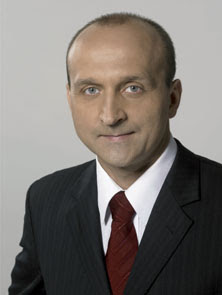
How Goldman Sachs took over the world
Whether it's a credit crunch to fix or an Olympics to plan, the list of Goldman Sachs alumni is sure to have a candidate
By Stephen Foley
If there's something weird in the financial world, who you going to call? Goldman Sachs.
The US government, involved in a firefight against the conflagration in the credit markets, is calling in another crisis-buster from the illustrious investment bank, this time Goldman's most senior banker to finance industry clients, Ken Wilson.
And so with this appointment, the Goldman Sachs Diaspora grows a little bit more influential. It is an old-boy network that has created a revolving door between the firm and public office, greased by the mountains of money the company is generating even today, as its peers buckle and fall.
Almost whatever the country, you can find Goldman Sachs veterans in positions of pivotal power.
The 61-year-old Mr Wilson has already proved influential in deals to recapitalize and reorganize some of America's listing banks. At the Treasury he will advise on what the federal government must to do help the process, but he will face scrutiny from those concerned about the tentacles wrapping lightly around government from Wall Street's mightiest bank. For the time being, bailing out Wall Street looks to be the same as bailing out the economy, but if those diverge there could be more questions asked about the influence of Goldman Sachs alumni on public policy.
George Bush picked up the phone this month, partly at the instigation of another Goldman Sachs alumnus, his Treasury secretary, Hank Paulson. Together with Mr Bush's chief of staff, Joshua Bolten, there will be three Goldman Sachs old boys in major positions of influence in the White House – but the US government is hardly alone in finding the bank's executives to be attractive hirees.
They are well-credentialed, partly by design. From its beginning when the German immigrant Marcus Goldman began discounting IOUs among the diamond merchants of New York in the 1870s, Goldman Sachs has always known about the power of the network of influence. Goldman hires former politicians and civil servants, as readily as it supplies them.
And then there is simply the intellectual quality of the employees, many hired as much youngster men via a gruelling interview process, and then forged in the fire of 17-hour work days.
With Goldman Sachs at the heart of Wall Street, and Wall Street at the heart of the US economy, few expects its power to wane. Indeed, The New York Times columnist David Brooks noted that Goldman Sachs employees have given more money to Barack Obama's campaign for president than workers of any other employer in the US. "Over the past few years, people from Goldman Sachs have assumed control over large parts of the federal government," Brooks noted grimly. "Over the next few they might just take over the whole darn thing."
John Thornton
From his post as professor and director of global leadership at Tsinghua University in Beijing, the former Goldman Sachs co-chief operating officer John Thornton has become a highly-influential figure in the developing business and political inter-relations between the US and China. He was Goldman's boss in Asia in the mid-Nineties and remains well connected in the East and the West.
Duncan Niederauer
Wall Streeters joked about a Goldman Sachs "takeover" of the New York Stock Exchange. Hank Paulson, the Goldman boss on the NYSE board, moved to oust the chairman, Dick Grasso, and recommended the then chief operating officer of Goldman, John Thain, as Mr Grasso's replacement. Mr Thain modernized the exchange as demanded by Goldman, and Mr Thain's old Goldman deputy, Duncan Niederauer, is in charge.
Jon Corzine
The former co-chief executive of Goldman went into full-time politics in 1999, having lost the internal power struggle that preceded the company's stock-market flotation in 1999. He has been governor of New Jersey since 2006, having spent the previous six years in the US Senate. His 2000 Senate election campaign was then the most expensive ever in the US, and Corzine spent $62m of his own money.
Joshua Bolten
For five years until 1999, Mr Bolten served as director of legal affairs for Goldman based in London, effectively making him the bank's chief lobbyist to the EU. The Republican lawyer aided George Bush's 2000 election campaign, helped co-ordinate policy in the White House and has been the President's chief of staff since 2006.
Paul Deighton
The man heading London's planning for the 2012 Olympic Games, Paul Deighton amassed a fortune estimated at over £100m during his two decades at Goldman Sachs, where he had been one of its most powerful investment bankers.
Robert Rubin
A US Treasury secretary under Bill Clinton, Mr Rubin could once again emerge as a powerful figure in Washington if Barack Obama wins the presidency, since he has maintained his influence on Democrat politics. Mr Rubin reached the second-highest rung at Goldman, becoming co-chief operating officer before joining the US government in 1993.
Gavyn Davies
The ex-chairman of the BBC still has the ear of Gordon Brown, to whom he has been a good friend and informal adviser. He is married to the Prime Minister's aide Sue Nye. Mr Davies spent 15 years as an economist at Goldman. He was commissioned to report on the future funding of the BBC by Mr Brown in 1999. Two years later, he was poached to chair it.
Jim Cramer
This former Goldman trader is, without question, the most influential stock pundit in the US. Hectoring and shouting his investment advice nightly on his CNBC show, Mad Money, he routinely moves share prices. His primal scream against the Federal Reserve ("They know nothing") was a YouTube sensation last year, as the central bank refused to lower interest rates to ease the pain of the credit crisis on Wall Street.
Robert Zoellick
Goldman provided a lucrative home to Robert Zoellick, the neo-conservative Republican, between the time he quit as Condoleezza Rice's deputy at the State Department in 2006 (having not secured the job he coveted as Treasury Secretary, when it went to Hank Paulson) and his appointment last year as head of the World Bank. At Goldman he had acted as head of international affairs, a kind of global ambassador and networker-in-chief.
Mario Draghi
The head of the Italian central bank is another example of the revolving door between Goldman and public service. Mr Draghi had been an academic economist, an executive at the World Bank and a director-general of the Italian treasury before joining Goldman as a partner in 2002. He is becoming a significant figure in the response to the credit crisis, chairing the financial stability forum of central banks, finance ministries and regulators.
Malcolm Turnbull
Treasurer for the opposition Liberal Party, Mr Turnbull is one of the fastest-rising politicians in Australia. He was the aggressive advocate who took on and beat the British Government in the Spy catcher trial of the former MI5 agent Peter Walker, but he then pursued a career in business and ran Goldman Australia from 1997 to 2001, before jumping in to politics to serve as environment minister under John Howard.
Hank Paulson
Cometh the hour, cometh the man. President George Bush must be delighted he lured a reluctant Hank Paulson away from his $38m-a-year job as Goldman Sachs chief executive in 2006, just in time to deal with the Wall Street crisis that has engulfed the entire US economy. The bird-watching enthusiast had been a surprising choice as Treasury secretary, since his environmentalism was at odds with much of Bush's policy.
Kazimierz Marcinkiewicz-Poland
graduated in 1984 from the Faculty of Mathematics, Physics and Chemistry (having studied physics) of the Wrocław University. He also completed post-graduate course in Administration at the Adam Mickiewicz University in Poznan. He worked as an elementary school teacher and a headmaster in his home city of Gorzów Wielkopolski.
In the 1980s, he was also a member of the Solidarity movement and editor of underground press materials. In 1992, he became a State Secretary (formal name for deputy minister) in the Ministry of National Education. From 1999 to 2000, he was the cabinet chief for prime minister Jerzy Buzek.
Cabinet of Kazimierz Marcinkiewicz
Following the victory of the Law and Justice party in the September 2005 Polish parliamentary elections, its prime ministerial candidate, party leader Jarosław Kaczyński decided against becoming prime minister so as not to damage the chances of his twin brother, Lech Kaczyński in the then-upcoming October presidential election. Instead the little-known Marcinkiewicz became PM, leading a coalition formed by Jarosław, who remained in the background, but influential.
Before his prime ministerial appointment, Marcinkiewicz remained a political cipher, which resulted in a political carte blanche after the appointment. Relatively unknown to the public at that time, due to his intensive political activity Marcinkiewicz gained a high public recognition, rapidly becoming the most trusted and popular politician in Poland.
Alex Bajan
RAQport Inc.
2004 North Monroe Street
Arlington Virginia 22207
Washington DC Area
USA
TEL: 703-528-0114
TEL2: 703-652-0993
FAX: 202-318-4021
sms/cell T-mobile: 703-485-6619
EMAIL: office@raqport.com
or alex@raqport.com
WEB SITE: http://raqport.com
Sunday, February 15, 2009
This is my Professor From China for Poland China Trade must see
This is my Professor From China for Poland China Trade 2009 must see
Alex Lech Bajan
RAQport Inc.
2004 North Monroe Street
Arlington Virginia 22207
Washington DC Area
USA
TEL: 703-528-0114
TEL2: 703-652-0993
sms: 703-485-6619
EMAIL: polonia@raqport.com
WEB SITE: http://raqport.com
New Centos BluQuartz Virtualization and Cluster Web Servers
Alex Lech Bajan
RAQport Inc.
2004 North Monroe Street
Arlington Virginia 22207
Washington DC Area
USA
TEL: 703-528-0114
TEL2: 703-652-0993
sms: 703-485-6619
EMAIL: polonia@raqport.com
WEB SITE: http://raqport.com
New Centos BluQuartz Virtualization and Cluster Web Servers
Wednesday, February 4, 2009
Z Polski wytransferowano 80 mld złotych prof. dr. hab. JerzyŻyżyński (2009-02-04)
Z Polski wytransferowano 80 mld złotych prof. dr. hab. JerzyŻyżyński (2009-02-04)
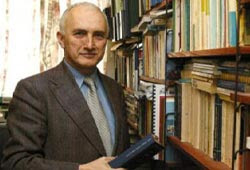
Z Polski wytransferowano 80 mld złotych prof. dr. hab. JerzyŻyżyński (2009-02-04)
Aktualności dnia
słuchajzapisz
Granice bywają pożyteczne
Nasz Dziennik, 2008-10-02
Pomimo początków recesji na Zachodzie Europa Środkowowschodnia nadal szybko się rozwija. To pokazuje, że niepełna integracja, zachowanie pewnej odrębności jest korzystne dla gospodarki Z prof. Jerzym Żyżyńskim, ekonomistą, wykładowcą Uniwersytetu Warszawskiego, rozmawia Małgorzata Goss Amerykański system finansowy składa się ostatnio jak domek z kart, administracja chce przeznaczyć 700 mld USD na podtrzymanie działalności kredytowej banków, mówi się o krachu podobnym do tego z 1929 roku. Kryzys wpłynie na polski system finansowy? - Wszystko zależy od tego, czy nasze pieniądze ulokowane w instytucjach finansowych zostały zainwestowane w amerykańskie aktywa na giełdzie i akcje padających banków. Jeżeli okazałoby się, że np. fundusze emerytalne ulokowały pieniądze emerytów w amerykańskie aktywa, a bardzo o to walczyły, to wartość naszego kapitału emerytalnego nagle by spadła, bo za oceanem wskutek przeceny akcji "wyparowało" wiele miliardów dolarów. Tak się jednak prawdopodobnie nie stało, ponieważ fundusze emerytalne mogą tylko 5 proc. kapitału lokować w instrumenty zagraniczne. - Na szczęście w dużym stopniu, bo nie całkowicie, wybroniono się przed naciskami z rynku, aby to ograniczenie znieść. To znakomity przykład, że istnienie granic między krajami i regulacji ograniczających przepływy finansowe jest pożyteczne. Amerykański kryzys został wywołany właśnie brakiem roztropności w likwidowaniu regulacji, które poprzednio zabezpieczały system finansowy. Brak bezpiecznych regulacji wystawił ten system na niekontrolowane działanie naturalnych praw gospodarki rynkowej. Dążenie do jak największych zysków, do udzielania kredytów za wszelką cenę, nie bacząc na możliwości spłaty przez kredytobiorców w powiązaniu z okresowym wzrostem stopy procentowej, doprowadziło do obecnego kryzysu. W Ameryce stosowano też bardzo skomplikowane narzędzia finansowe, transakcje na instrumentach pochodnych, przy których zarabia się na czymś, czego się w istocie samemu nie posiada... - Te instrumenty umożliwiają szybszy obrót pieniądzem i zwiększają zyski instytucji finansowych, ale gospodarce nie przynoszą tak dużych korzyści, jak niektórzy sądzili. Uwolnienie rynków finansowych uważane było za ogromny sukces, mówiono o "wielkim wybuchu" - Big Bang. Obroty systemu finansowego po likwidacji barier wzrosły ponad stukrotnie, stały się wielokrotnie większe niż realny wzrost gospodarki. Pamiętajmy, że system finansowy żyje z obrotu pieniądzem, z procentu od obrotu - po prostu ściąga część popytu i szybciej obraca tymi pieniędzmi. Gospodarka realna zdecydowanie mniej na tym skorzystała niż sektor finansowy. System bankowy należy ratować publicznymi pieniędzmi? Amerykańscy podatnicy nie chcą płacić na bankierów z Wall Street, chcą, żeby odpowiadali akcjonariusze i management... - Akcjonariusze to zaledwie 7-10 proc. kapitału banku. Ludzie nie rozumieją, czym są banki. Nawet nasi eksperci mówią: po co ratować banki, niech bankrutują. Tymczasem banki to pieniądze deponentów. Bankructwo oznacza straty milionów ludzi, którzy mają w nich depozyty. Moim zdaniem, zablokowanie przez Kongres pomocy dla sektora finansowego obliczone jest na tanie wykupienie pewnych instytucji i aktywów przez tych, którzy dysponują pieniędzmi. Zagraniczne banki w Polsce są oddzielone kapitałowo od upadających centrali zagranicznych? Czy ich klienci mogą spać spokojnie? - Formalnie są to oddzielne instytucje. Dzisiaj wychodzi na jaw obłuda tych, którzy sprzedawali polskie banki zagranicznym inwestorom. Wtedy pani Gronkiewicz-Waltz przekonywała, że nasze banki staną się częścią systemu banków zachodnich i jak będą miały kłopoty, to tamte im pomogą. Tymczasem teraz mówi się, że są to odrębne instytucje i ani my im nie pomożemy, ani one nam. Są opinie, że jednak najbezpieczniej dzisiaj trzymać pieniądze w czysto polskim banku, a nie w bankach zagranicznych, których centrale na Zachodzie znajdują się w tarapatach. - Teoretycznie nie można wykluczyć, że jakaś instytucja wykorzysta kruczki prawne, żeby spowodować transgraniczne przepływy kapitału dla ratowania centrali. Wprawdzie nadzór finansowy dobrze zabezpieczył system, ale trudno wszystko przewidzieć. A więc transfery z Polski są możliwe? - Transfery zysków tak - to cały czas się odbywa, ale banki nie mogą przetransferować naszych depozytów. Zyski będą transferować. Spadek naszej giełdy będzie wynikał z tego, że będą wyprzedawać inwestycje, aby ściągnąć kapitały i ratować swoje centrale. Jednak masowa wyprzedaż powoduje spadek wartości tych aktywów, więc pojawi się naturalne ograniczenie... A jak kryzys wpłynie na inne sektory gospodarki Zachód Europy już dotyka recesja... - Obecny kryzys, wbrew niektórym opiniom, nie ogranicza się do sektora finansowego - gospodarka realna także odczuwa perturbacje. Pojawiają się kłopoty z kredytem, bo banki ograniczają akcję kredytową. Z kolei jeśli kredyty są niedostępne - przedsiębiorstwa starają się wykorzystywać środki własne, wycofując depozyty z banków. To zjawisko określane jest jako "run na banki". No a wtedy pojawia się ryzyko, że banki nie wytrzymają i nastąpi zjawisko domina, serii upadków. Dlatego niezbędny jest plan ratunkowy, aby nie doszło do takiego kryzysu jak w 1929 roku. Jeśli plan ratunkowy się powiedzie - realna gospodarka powinna odzyskać siły szybciej nawet niż sektor finansowy. Polska gospodarka odczuje skutki kryzysu? Gospodarka Niemiec spowalnia, a są one naszym największym partnerem. - Możemy odczuć skutki spowolnienia eksportu, gdyby niemiecki rynek się skurczył. Ale to nie powinno trwać dłużej niż pół roku. Na razie jednak, pomimo początków recesji na Zachodzie, Europa Środkowowschodnia nadal szybko się rozwija. To pokazuje, że niepełna integracja, zachowanie pewnej odrębności jest korzystne dla gospodarki. Polska znajduje się w odmiennym cyklu gospodarczym, ma inne, szersze pola rozwojowe. Towarzyszy temu jednak silna aprecjacja polskiej waluty w relacji do eurodolara. Jaki to ma wpływ na gospodarkę? - Aprecjacja niekorzystnie wpływa na eksporterów, ale jest korzystna dla tych, którzy posiadają aktywa pieniężne i depozyty. W razie przystąpienia do euro umocnienie waluty powoduje, że przeliczenie ich zarobków i depozytów na euro jest korzystniejsze. Jeszcze niedawno minister Rostowski mówił, że przystąpienie Polski do eurostrefy nastąpi tylko w warunkach uspokojenia na rynkach finansowych. Tymczasem dziś mamy na tych rynkach tsunami, a nie ciszę, a mimo to premier ogłosił zamiar przystąpienia do euro w 2011 r., a w 2009 r. wejście w fazę ERN2 (powiązania złotego z euro)... - Wiele wskazuje na to, że premier uległ naciskom pewnych lobby, które go przekonują, że przyjęcie euro właśnie teraz będzie korzystne. Podobnie wmówiono to Słowakom. Owszem, przejście na euro jest tym korzystniejsze, im mocniejsza jest dana waluta, ale umocnienie waluty musi być wynikiem długiego procesu gospodarczego, nabierania siły przez gospodarkę, a nie efektem spekulacji. Nagły skok aprecjacji nie jest korzystny. Przejście na euro i oddanie polityki monetarnej EBC może rozszczelnić nasz system, który dotąd broni się przed skutkami kryzysu w Ameryce i Europie? - Oczywiście. Państwo ma dwa instrumenty wpływania na gospodarkę, a są to: polityka pieniężna prowadzona przez bank centralny i polityka fiskalna prowadzona przez rząd. Jak pozbywamy się własnego pieniądza, to zostaje nam tylko jeden instrument. To tak, jakby skórę pozbawić warstwy wierzchniej i wystawić na działanie czynników zewnętrznych. Po przyjęciu euro będziemy polskimi oszczędnościami zasypywali dziurę finansową w globalnym systemie? - Kanonem Unii jest swoboda przepływu kapitału, więc samo przejście na euro nie ma decydującego znaczenia. Niebezpieczeństwo tkwi w dyrektywach Unii, które odnoszą tę zasadę do naszych funduszy emerytalnych, uznając je za instytucje komercyjne, a nie część sektora publicznego. Wprowadzenie w życie tych dyrektyw sprawi, że ustawowe "bezpieczniki" zostaną wyłączone, a wtedy wartość naszego kapitału może z dnia na dzień spaść np. o 1/3 i tak się skończy sen o "godnych emeryturach".
Propaganda AEI tam gzie pracowal Sikorski szkalujaca Polske I Polakow , zmienianie historii
Propaganda AEI tam gzie pracowal Sikorski szkalujaca Polske I Polakow , zmienianie historii
Musimy na to odpowiedziec.
Klania sie
Lech Alex Bajan
RAQport Inc.
2004 North Monroe Street
Arlington Virginia 22207
Washington DC Area
USA
TEL: 703-528-0114
TEL2: 703-652-0993
FAX: 703-940-8300
sms/cell T-mobile: 703-485-6619
EMAIL: office@raqport.com
or alex@raqport.com
WEB SITE: http://raqport.com
For Centuries, Poland Has Been a Home to the Jews Print Mail
http://www.aei.org/publications/filter.all,pubID.27783/pub_detail.asp
By Joshua Muravchik
Posted: Wednesday, April 9, 2008
ARTICLES
Dziennik Zachodni (Katowice, Poland)
Publication Date: March 22, 2008
Joshua Muravchik
It is doubtful there is any relationship in the world between two peoples more fraught than that between Poles and Jews. Even to say the phrase, "Poles and Jews," raises difficult questions. After all, the "Jews" we are talking about are not the Jews of Argentina or the United States. They are the Jews who live or once lived in Poland. Are these people not also Poles?
The answer is not as easy as it seems at first glance, because Jewishness has a dual quality. On the one hand it is a religion. On the other, it is a nationality. Judaism has two founders and two starting points: Abraham and Moses, Ur and Mount Sinai. Abraham was the first of the Jewish people. He entered a special covenant with God, who promised to sanctify his offspring.
And Abraham promised God unquestioning obedience. But Abraham did not know the Commandments and had no Torah. It was Moses who was the vehicle for the Bible and the Jewish religion.
I have discovered a large number of Poles, especially younger ones, who, in their devotion to building a new democratic Poland, are sensitive to the painful story of the Jews on Polish soil, are among Europe's firmest supporters of Israel, and who are vigilant against anti-Semitism just as against fascism, Communism, and other ideologies of hatred.
After the Romans destroyed the Temple, Jews were dispersed across the globe, taking refuge where they could find it. In a few times and places, they were allowed to enter the surrounding societies. When this choice was available, some Jews chose to absorb the identity of the place where they were living, while others chose to remain apart, feeling themselves to be exiles, praying for the return to Jerusalem. And still others tried to navigate between these two positions, seeking acceptance within the larger society while remaining faithful to the religion of their ancestors. But in most places at most times, Jews did not have this choice. Their presence was tolerated only as alien people, whose rights and whose comings-and-goings were restricted.
Poland became the home to perhaps the largest Jewish population in the history of the Diaspora, amounting to more than ten percent of the population of Poland. This fact in itself would have made the Jewish presence a complicated issue. Complicating it further was the fact that Poland was itself not sovereign during much of the era of highest Jewish population. Just as the Jews have suffered unique tragedies, so has Poland, having been repeatedly conquered and partitioned. So the dense Jewish presence among the Poles was not by the choice of either people.
The Poles are a deeply religious people, perhaps the most Catholic of Catholic nations, and this, too, added complications. Until Vatican II, church teaching charged the Jews for the crime of crimes--killing Christ.
Armed with this teaching, Poles were bound to look upon Jews with hostility.
Jews suffered much hatred and abuse from Poles, and they came to feel that Poles in general were prejudiced against them. (As the Polish-born Israeli Prime Minister Yitzhak Shamir once expressed it: "Poles drink in anti-Semitism with their mothers' milk.")
However much truth or exaggeration went into this, the Jews felt so much victimized by Poles that they were often oblivious to how much the Poles themselves were victims--of Germans and Russians. And then came still another complication that made some Poles feel that they were victims of the Jews. This was the rise of Communism, a monstrous new religion which, together with its offshoots, made the twentieth century the bloodiest in history. Only a small percentage of Jews--those who had lost touch with their own faith and were searching for a new one--became Communists. But a large percentage of Communists were Jews. To some Poles--and others in East-central Europe--it appeared that Communism was some kind of Jewish plot.
The culmination of this story came with the rise of Nazism, one of the offshoots of Communism. The Nazis systematically annihilated the Jews of Europe, including Poland, in the greatest, most savage slaughter the world has ever seen. So immense was this crime that it largely overshadowed the horrible crime perpetrated against the Poles, including once again the partition of their country and the death of millions. The Polish tragedy was compounded by a terrible denouement in which Poland, having foot to free itself from one heartless conqueror, ended up under the boot of another, the Soviet Communists.
What of the story of Poles and Jews through these years of unparalleled grief for both? Sad to say, many Poles were indifferent to the fate of the Jews; some were glad to be rid of them; and some participated in the slaughter. But others risked their lives (and some lost theirs) trying to save their Jewish neighbors. At Yad Vashem, Israel's holocaust museum, there is a section honoring "righteous gentiles" who saved Jews from Hitler. There are more Poles memorialized there than any other nationality.
Prominent among them was my own teacher, Jan Karski. Karski, whose real name was Kozielewski, was the first to bring authoritative evidence of the holocaust to Western leaders. To do this he risked his life repeated, twice sneaking inside the Warsaw Ghetto and once inside a death camp, in order to make himself an eye-witness. After the epic documentary, Shoah, appeared Karski became a great hero to Jews. Less well remembered was that he was above all a Polish patriot, a devout Catholic, whose message about the murder of the Jews was only part of a larger mission on behalf of the Polish underground.
After the war, there were still new crimes committed against some of the surviving Jews by Poles. But sorting out this unbearably painful history is made more difficult by the role of Communists who were busily subjugating Poland to Soviet rule and who played countless underhanded games that have not all yet been uncovered.
I--an American Jewish writer, activist, anti-Communist--became involved with Poland in the 1980s when, in the wake of martial law, I edited a collection of translation of Solidarnosc documents into English. I collaborated with Solidarnosc's representatives in New York, who happened to be two Polish Jews--or better, Jewish Poles.
Since the triumph of Solidarnosc and the restoration of Polish freedom, I have seen two things in respect to the story of Poles and Jews. On the one hand, I have seen traces of the historic anti-Semitism, even in the words of some prominent Poles. On the other hand, I have discovered a large number of Poles, especially younger ones, who, in their devotion to building a new democratic Poland, are sensitive to the painful story of the Jews on Polish soil, are among Europe's firmest supporters of Israel, and who are vigilant against anti-Semitism just as against fascism, Communism, and other ideologies of hatred. The future of Poland, I am confident, belongs to them.
http://www.aei.org/scholars/filter.all,scholarID.42/scholar.asp
Muravchik studies the United Nations, neoconservatism, the history of socialism and communism, the Arab-Israeli conflict, and global democracy, terrorism, and the Bush Doctrine. His most recent book is The Future of the United Nations: Understanding the Past to Chart a Way Forward (AEI Press, 2005).
Professional Experience
-Member, State Department's Advisory Committee on Democracy Promotion, 2007-present -Adjunct professor, Institute of World Politics, 1992-present -Member, Maryland State Advisory Committee of the U.S. Commission on Civil Rights, 1985-1997 -Member, Commission on Broadcasting to the People's Republic of China, 1992 -Adjunct scholar, Washington Institute on Near East Policy, 1986-present -Executive director, Coalition for a Democratic Majority, 1977-1979 -Editorial board member, World Affairs and Journal of Democracy
Education
Ph.D., international relations, Georgetown University B.A., City College of New York Informacja z Polskiego google
http://www.google.com/search?hl=en&rls=com.microsoft%3A*&q=dziennik+zachodni
+Joshua+Muravchik&lr=lang_pl
Sunday, February 1, 2009
Frag. Rozmów Niedokonczonych, prof. Bogusław Wolniewicz
Frag. Rozmów Niedokonczonych, prof. Bogusław Wolniewicz
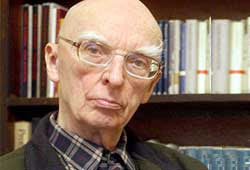
Frag. Rozmów Niedokonczonych, prof. Bogusław Wolniewicz
prof. Bogusław Wolniewicz (2009-02-01)
Aktualności dnia
słuchajzapisz
Frag. Rozmów Niedokonczonych, prof. Bogusław Wolniewicz (2009-02-01)Rodzaj audycji: [Aktualności dnia]
Autor: prof. Bogusław Wolniewicz
Adres: http://www.radiomaryja.pl/audycje.php?id=10738
Sympozjum naukowe "Oblicza Słowa": Wykład prof. dr hab. Bogusława Wolniewicza (2009-01-24)Rodzaj audycji: [Aktualności dnia]
Autor: prof. dr hab. Bogusław Wolniewicz
Adres: http://www.radiomaryja.pl/audycje.php?id=10653
Po XVI Pielgrzymce RRM (2008-07-14) Rodzaj audycji: [Aktualności dnia]
Autor: prof. dr hab. Bogusław Wolniewicz
Adres: http://www.radiomaryja.pl/audycje.php?id=8581
Wykłady z Krakowa (2008-06-16)Rodzaj audycji: [Rozmowy niedokończone]
Autor: prof. Jerzy Robert Nowak, prof. Bogusław Wolniewicz
Adres: http://www.radiomaryja.pl/audycje.php?id=8317
Polska wobec wyzwań współczesności (2008-06-16)Rodzaj audycji: [Rozmowy niedokończone]
Autor: prof. dr hab. Jerzy Robert Nowak, prof. Bogusław Wolniewicz, prof. Andrzej Nowak
Adres: http://www.radiomaryja.pl/audycje.php?id=8312
Polska wobec wyzwań współczesności: prof.dr hab. Bogusław Wolniewicz (czyt. dr Kawęcki) (2008-06-15)Rodzaj audycji: [Aktualności dnia]
Adres: http://www.radiomaryja.pl/audycje.php?id=8301
Zrozumieć rzeczywistość - wokół działań PO (2008-05-29)Rodzaj audycji: [Aktualności dnia]
Autor: prof. Bogusław Wolniewicz
Adres: http://www.radiomaryja.pl/audycje.php?id=8123
Polski Punkt Widzenia: Ataki na Radio Maryja i Ojca Dyrektora (2008-05-27)Rodzaj audycji: [Inna audycja]
Autor: prof. dr hab. Bogusław Wolniewicz, red. Jan Maria Jackowski, red. Jacek Karczewski
Adres: http://www.radiomaryja.pl/audycje.php?id=8104
Wizyta premiera Tuska w Izraelu (2008-04-11)Rodzaj audycji: [Aktualności dnia]
Autor: prof. dr hab Bobusław Wolniewicz
Adres: http://www.radiomaryja.pl/audycje.php?id=7681
Ważne sprawe dotyczące Polaków, analiza stu dni rządu Donalda Tuska (2008-02-23)Rodzaj audycji: [Rozmowy niedokończone]
Autor: prof. dr hab. Jerzy Robet Nowak, prof. dr hab. Bogusław Wolniewicz
Adres: http://www.radiomaryja.pl/audycje.php?id=7235
Polski Punkt Widzenia (2008-02-12)Rodzaj audycji: [Inna audycja]
Autor: prof. Bogusław Wolniewicz
Adres: http://www.radiomaryja.pl/audycje.php?id=7154
Dyskusja nad "Strachem" (2008-01-21)Rodzaj audycji: [Aktualności dnia]
Autor: prof. dr hab. Bogusław Wolniewicz
Adres: http://www.radiomaryja.pl/audycje.php?id=6957
Polski Punkt Widzenia (2007-12-21)Rodzaj audycji: [Aktualności dnia]
Autor: prof. dr hab. Bogusław Wolniewicz
Adres: http://www.radiomaryja.pl/audycje.php?id=6656
Nagonka na Radio Maryja (2007-12-17)Rodzaj audycji: [Aktualności dnia]
Autor: prof.Boguslaw Wolniewicz
Adres: http://www.radiomaryja.pl/audycje.php?id=6624
Komentarz powyborczy (2007-10-25)Rodzaj audycji: [Aktualności dnia]
Autor: prof. dr hab. Bogusław Wolniewicz
Adres: http://www.radiomaryja.pl/audycje.php?id=6153
Ostatnie debaty polityczne (2007-10-16)Rodzaj audycji: [Aktualności dnia]
Autor: prof. dr hab. Bogusław Wolniewicz
Adres: http://www.radiomaryja.pl/audycje.php?id=6085
"Minął miesiąc" (2007-10-07)Rodzaj audycji: [Rozmowy niedokończone]
Autor: prof. dr hab. Jerzy Robert Nowak, prof. dr hab. Bogusław Wolniewicz, Paweł Pasionek
Adres: http://www.radiomaryja.pl/audycje.php?id=6042
Echa wczorajszej debaty Jarosław Kaczyński - Aleksander Kwaśniewski (2007-10-02)Rodzaj audycji: [Aktualności dnia]
Autor: prof. dr hab. Bogusław Wolniewicz
Adres: http://www.radiomaryja.pl/audycje.php?id=6005
Prezydent Kwaśniewski kompromituje Polskę w świecie (2007-09-24)Rodzaj audycji: [Aktualności dnia]
Autor: prof. dr hab. Bogusław Wolniewicz
Adres: http://www.radiomaryja.pl/audycje.php?id=5962
Rewelacje "Wprost" na temat prof. Nowaka (2007-09-10)Rodzaj audycji: [Aktualności dnia]
Autor: prof. dr hab. Bogusław Wolniewicz
Adres: http://www.radiomaryja.pl/audycje.php?id=5898
Polski punkt widzenia: Reakcje po decyzji prokuratury toruńskiej (2007-08-22)Rodzaj audycji: [Inna audycja]
Autor: prof. dr hab. Bogusław Wolniewicz
Adres: http://www.radiomaryja.pl/audycje.php?id=5797
Dalsze manipulacje medialne wokół Radia Maryja (2007-08-08)Rodzaj audycji: [Aktualności dnia]
Autor: prof. dr hab. Bogusław Wolniewicz
Adres: http://www.radiomaryja.pl/audycje.php?id=5682
Co to jest lobbing? (2007-07-30)Rodzaj audycji: [Aktualności dnia]
Autor: prof. dr hab. Bogusław Wolniewicz
Adres: http://www.radiomaryja.pl/audycje.php?id=5650
Wypowiedź w obronie o. Tadeusza Rydzyka CSsR (2007-07-16) Rodzaj audycji: [Aktualności dnia]
Autor: prof. dr hab. Bogusław Wolniewicz
Adres: http://www.radiomaryja.pl/audycje.php?id=5673
Interes mediów w sprawie wypowiedzi o. Tadeusza Rydzyka (2007-03-16)Rodzaj audycji: [Aktualności dnia]
Autor: prof.dr hab. Bogusław Wolniewicz
Adres: http://www.radiomaryja.pl/audycje.php?id=4576
Roszczenia względem Polski w sprawie mienia żydowskiego cz.III (2007-03-11)Rodzaj audycji: [Rozmowy niedokończone]
Autor: prof.dr hab. Bogusław Wolniewicz; prof.dr hab. Jerzy Robert Nowak
Adres: http://www.radiomaryja.pl/audycje.php?id=4516
Roszczenia względem Polski w sprawie mienia żydowskiego cz.II (2007-03-11)Rodzaj audycji: [Rozmowy niedokończone]
Autor: prof.dr hab. Bogusław Wolniewicz; prof.dr hab. Jerzy Robert Nowak
Adres: http://www.radiomaryja.pl/audycje.php?id=4515
Roszczenia względem Polski w sprawie mienia żydowskiego cz.I (2007-03-11)Rodzaj audycji: [Rozmowy niedokończone]
Autor: prof.dr hab. Bogusław Wolniewicz; prof.dr hab. Jerzy Robert Nowak
Adres: http://www.radiomaryja.pl/audycje.php?id=4514
"Rzetelność" dziennikarska... (2006-12-09) Rodzaj audycji: [Aktualności dnia]
Autor: prof. dr hab. Bogusław Wolniewicz
Adres: http://www.radiomaryja.pl/audycje.php?id=3671
Opieszałość polskich sądów (2006-11-30)Rodzaj audycji: [Aktualności dnia]
Autor: prof. dr hab. Bogusław Wolniewicz
Adres: http://www.radiomaryja.pl/audycje.php?id=3561
Debata o wychowaniu młodzieży (2006-11-04)Rodzaj audycji: [Aktualności dnia]
Autor: prof. dr hab. Bogusław Wolniewicz
Adres: http://www.radiomaryja.pl/audycje.php?id=3325
Czy koalicja jest możliwa? (2006-10-10)Rodzaj audycji: [Aktualności dnia]
Autor: prof. Bogusław Wolniewicz
Adres: http://www.radiomaryja.pl/audycje.php?id=3097
Zmowa z posłanką! Oświadczenie Niezależnego Zespołu ds. Etyki Mediów (2006-09-30)Rodzaj audycji: [Aktualności dnia]
Autor: prof. Bogusław Wolniewicz
Adres: http://www.radiomaryja.pl/audycje.php?id=3008
Książka J.T. Grossa (2006-08-12)Rodzaj audycji: [Aktualności dnia]
Autor: prof. Bogusław Wolniewicz
Adres: http://www.radiomaryja.pl/audycje.php?id=2640
Tajemniczy atak na Radio Maryja (2006-04-25) Rodzaj audycji: [Aktualności dnia]
Autor: prof. dr hab. Bogusław Wolniewicz
Adres: http://www.radiomaryja.pl/audycje.php?id=1850
Artykuł Gazety Wyborczej dotyczący wypowiedzi prof. dra hab. Bogusława Wolniewicza z 11.04.2006 (2006-04-12)Rodzaj audycji: [Aktualności dnia]
Autor: prof. dr hab. Bogusław Wolniewicz
Adres: http://www.radiomaryja.pl/audycje.php?id=1763
Społeczny Niezależny Zespół ds. Etyki Mediów (2006-04-11) Rodzaj audycji: [Aktualności dnia]
Autor: prof. dr hab. Bogusław Wolniewicz
Adres: http://www.radiomaryja.pl/audycje.php?id=1756
Rada Etyki Mediów oskarżyła Radio Maryja i red. Stanisława Michalkiewicza o antysemityzm (2006-04-04)Rodzaj audycji: [Aktualności dnia]
Autor: prof. dr hab. Bogusław Wolniewicz
Adres: http://www.radiomaryja.pl/audycje.php?id=1703
Subscribe to:
Posts (Atom)